
AI in Architecture Schools: How Students Are Using It (and What Faculty Think)
Students are already there. Schools are catching up. The interesting question is how AI changes what gets taught.
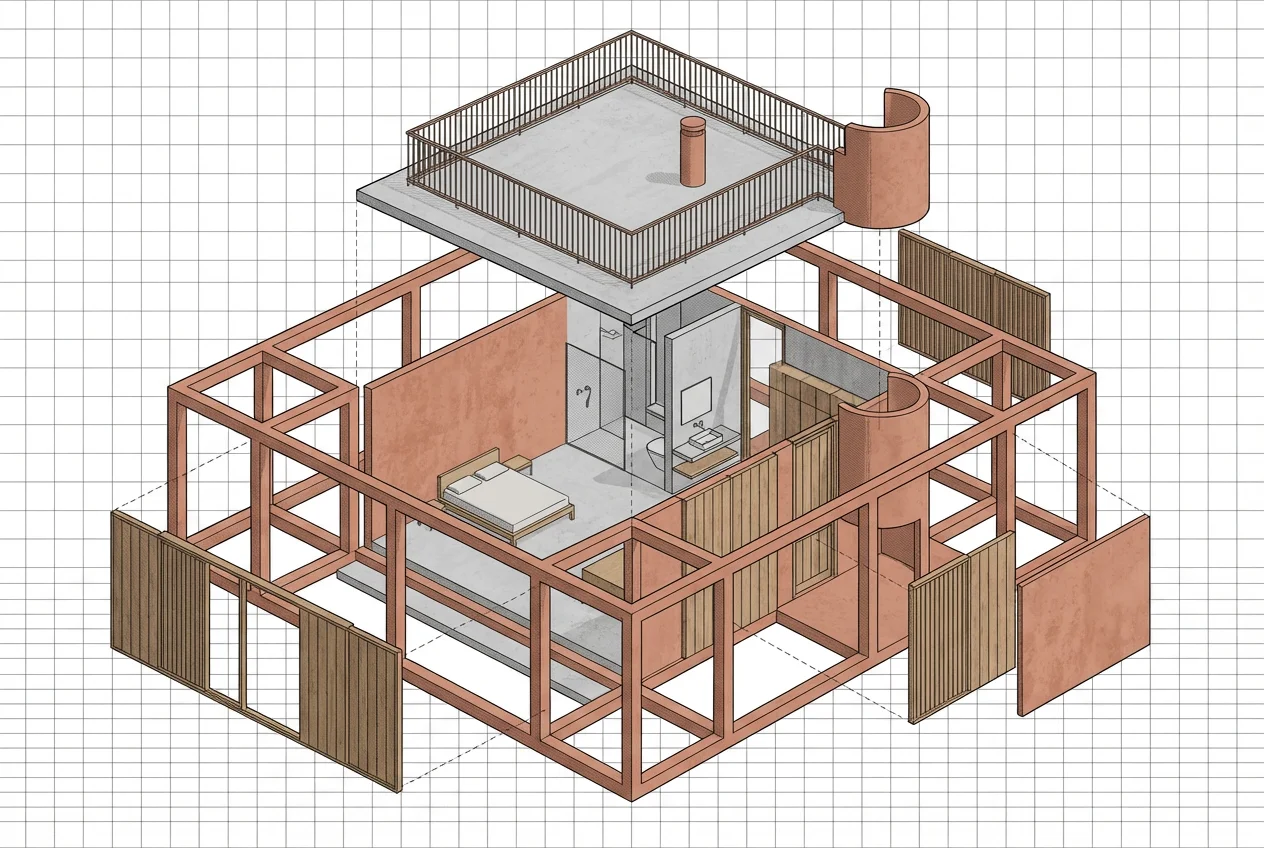
Walk through any architecture school studio today and you will see AI-generated images alongside hand drawings, physical models, and Rhino screenshots. Students have adopted generative AI faster than any other demographic in architecture, and for a simple reason: they have the least to unlearn.
A third-year student does not have a decade of V-Ray muscle memory. They do not have a rendering pipeline they have invested thousands of hours in. When a tool appears that can turn a rough SketchUp model into a presentation-quality render in 20 seconds, adoption is instant.
What students actually use AI for
Based on conversations with architecture students across European and North American schools, the use cases cluster around three areas.
First: concept visualization. The biggest one. Students use AI to see their ideas faster than traditional rendering allows. A thesis student exploring ten facade variations can generate all ten in under five minutes, then select three to develop in detail. The AI becomes a sketching tool, not a final output.
Second: competition entries. Architecture competitions are image-heavy and time-poor. Students working in teams of two or three cannot afford a professional renderer. AI rendering levels the playing field, producing competition-quality visuals that would have been impossible for a student team five years ago.
Third: design analysis. This one is less visible but potentially more significant. Students are using AI to test material studies, lighting conditions, and spatial configurations as a feedback mechanism during design. It is not about the final image - it is about seeing the spatial consequence of a decision before committing to it.
How schools are responding
Responses range from enthusiastic integration to outright bans. Most schools land somewhere in the middle: AI is permitted but must be disclosed, and it cannot replace hand drawing or model-making as assessed skills.
The more progressive programs are teaching AI as a design instrument. TU Delft, the Bartlett, and SCI-Arc have all integrated AI rendering workshops into their curricula. The focus is not on the tool but on critical use: when does AI help the design process, and when does it short-circuit genuine spatial thinking?
That is the right question. A student who uses AI to generate a facade without understanding why it works structurally or spatially has learned nothing. A student who uses AI to rapidly test their own ideas, compare alternatives, and communicate spatial intent has gained a genuine design advantage.
What it means for practice
Graduates entering practice in 2026 and beyond arrive with AI fluency as a baseline skill. They expect rendering to be instant. They expect to iterate visually during design, not after it. They expect their tools to understand architectural context.
Practices that have not adopted AI rendering will find it increasingly difficult to attract this talent. And practices that have adopted it will find these graduates immediately productive, because the skill set transfers directly.
Gaia offers free accounts for architecture students - 5 credits on signup. The same studio professional architects use, because the best time to learn a professional workflow is while you are still in school.