
Every building you've ever been in was designed with 1997 software. That's about to change.
a16z just published the strongest case yet for AI in architecture. Here's what they got right — and the part they missed.
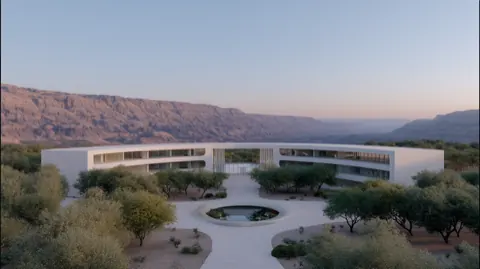
Last week, a16z published "Every Building You've Ever Been In Was Designed By Software Built in 1997." The thesis: a $13 trillion industry — architecture, engineering, and construction — still runs on Autodesk Revit, a tool that hasn't meaningfully changed in two decades. AI is about to break that open.
They're right. But the disruption won't start with replacing Revit.
The numbers are staggering
85% of construction projects exceed budgets. Three-quarters finish late. Over 70% of rework traces back to design errors, not site conditions. In the US alone, rework and miscommunication cost $177 billion annually. Construction professionals spend 35% of their time — 14 hours a week — on non-productive activities: hunting for information, resolving conflicts, fixing mistakes.
Revit holds 95% market share. It generates roughly $3 billion in annual recurring revenue. And according to the people who actually use it every day, its interface looks the same as it did 20 years ago.
Where a16z is looking
The article identifies three attack vectors: replace Revit entirely (hard, historically a graveyard), build around Revit's gaps (pre-bid document review, coordination), or attack services directly (automating MEP design — mechanical, electrical, plumbing). Companies like Motif, LightTable, and Endra are taking these routes.
All valid. All important. But all of them target what happens after the design direction is set. They optimize the production phase — the months of technical documentation, coordination, and construction.
The part they missed
Before anyone opens Revit, before a single MEP system is routed, before any construction document is reviewed — there's a moment that determines everything: the concept phase. The conversation between an architect and a client where a direction is chosen.
This phase is wildly inefficient. An architect spends days or weeks producing concept renders — mood boards, SketchUp models, hand-drawn perspectives — to help a client see what a space could feel like. The client says "I don't know, can we try something warmer?" and the cycle restarts. Multiply this by every room, every revision, every project.
It's the most human-intensive, least tool-supported phase of the entire building lifecycle. And it's where the most consequential decisions happen — because 70% of rework starts with a design choice that didn't land.
Sketch to render in 20 seconds
This is what we built Gaia for. Draw something on paper. Photograph it. Get a photorealistic render back in 20 seconds. No SketchUp. No Revit. No render farm. Upload a room photo and see four redesigns in your actual space, in four different design directions, before the meeting starts.
An architect using Gaia doesn't replace their BIM workflow. They eliminate the bottleneck before it. Client alignment that took three rounds of revisions over two weeks now happens in a single sitting. The client sees it. They feel it. They say yes. Then you open Revit.
The AI that learns your design sense
a16z makes an important observation about AI understanding context: a model that can interpret "server room" as a set of cooling loads, code requirements, and ductwork constraints. We agree — but context isn't just technical. It's aesthetic.
Every competitor in this space resets to zero every session. You open the tool, you describe what you want from scratch, you get generic output. Gaia is different. It builds a digital twin of your design taste. It remembers that you prefer warm materiality over cool minimalism, that you gravitate toward biophilic elements, that your clients in this particular market respond to Japanese-Scandinavian hybrids.
The more you use it, the better it gets. No other tool in the AEC stack does this — not Revit, not any AI startup a16z mentioned. Taste memory is uncontested ground.
Where this leads
The a16z piece envisions AI companies pricing on "share of incremental fees, for efficiency gained, for speed to build, for the change orders prevented." We think that's exactly right. When a concept render that used to take a week takes 20 seconds, the value isn't in the render — it's in the project that got approved two weeks faster. The change orders that never happened because the client actually understood what they were getting.
- For renovating homeowners: see your style in your actual room before you spend anything — gaia.computer/style-quiz
- For architects: sketch → photorealistic render in 20 seconds. Client presentations that close in one meeting — gaia.computer/studio
- For real estate agents: stage any property in 20 seconds. One staged listing pays for 20 months of Gaia Pro
The $13 trillion opportunity starts with a conversation
a16z is right that the built world is about to change. Revit's monopoly will crack. MEP automation will transform engineering firms. Construction coordination will get smarter. But the first domino — the one that determines whether a project goes smoothly or becomes a $60 million dispute — is whether the architect and the client are actually looking at the same thing.
That's the problem we're solving. Not the last mile of construction. The first 20 seconds of imagination.